Quick Answer. Chamois cloth thickness is measured in millimetres across the pile face, and the gauge sets how the cloth behaves on a panel. 0.8 mm follows curved glass and narrow trim, 1.0 mm covers general panel wipe-down, and 1.2 mm carries more water on a wet surface. The wrong one costs you a second pass, not a better finish.
What this guide answers
- Which chamois cloth thickness to specify for glass, for paint and for a wet panel, and what changes when you pick wrong.
- Why "1.0 mm" on its own is not a specification, and what to write on the order instead.
- How to check a swatch at goods-in in five steps, with your own caliper.
Key Takeaways
- Thickness is a handling decision, not a quality score. A thicker cloth is not a better cloth.
- 0.8 mm for curved glass and tight trim, 1.0 mm as the general gauge, 1.2 mm for wet, large-area work.
- Ask for the tolerance in writing; a gauge quoted without one is a range, not a specification.
- Cut edges are unsealed at every gauge, so edge finish belongs in the same conversation as thickness.
- Material-level REACH SVHC paperwork is confirmed at sample stage, not at the order stage.
Why the Gauge Decides Whether You Chase a Streak
Chamois cloth thickness is usually the first number a buyer fixes and the last one anybody explains. The order says 1.0 mm, the swatch that arrives feels different from the last batch, and nobody can say whether the cloth was wrong or the job was, because the gauge was never tied to a task.
The failure shows up as a streak, not as a spec error. A cloth that bridges a curve instead of following it leaves an unwiped strip under the bridge; a cloth too thin for a wet panel needs a second pass, and the second pass is where a drying mark starts. Neither is a defect in the material. Both are the wrong gauge for the job.
What Chamois Cloth Thickness Actually Measures

The reading is taken with a caliper across the pile face, under light, consistent pressure. On a chamois-type microfiber it spans three layers: a non-woven microfiber base, a polyurethane layer, and the raised pile that does the wiping. The figure in a specification is the total of all three, which is why two cloths quoted at the same gauge can still feel different: the pile can be tall on a thin base, or short on a dense one.

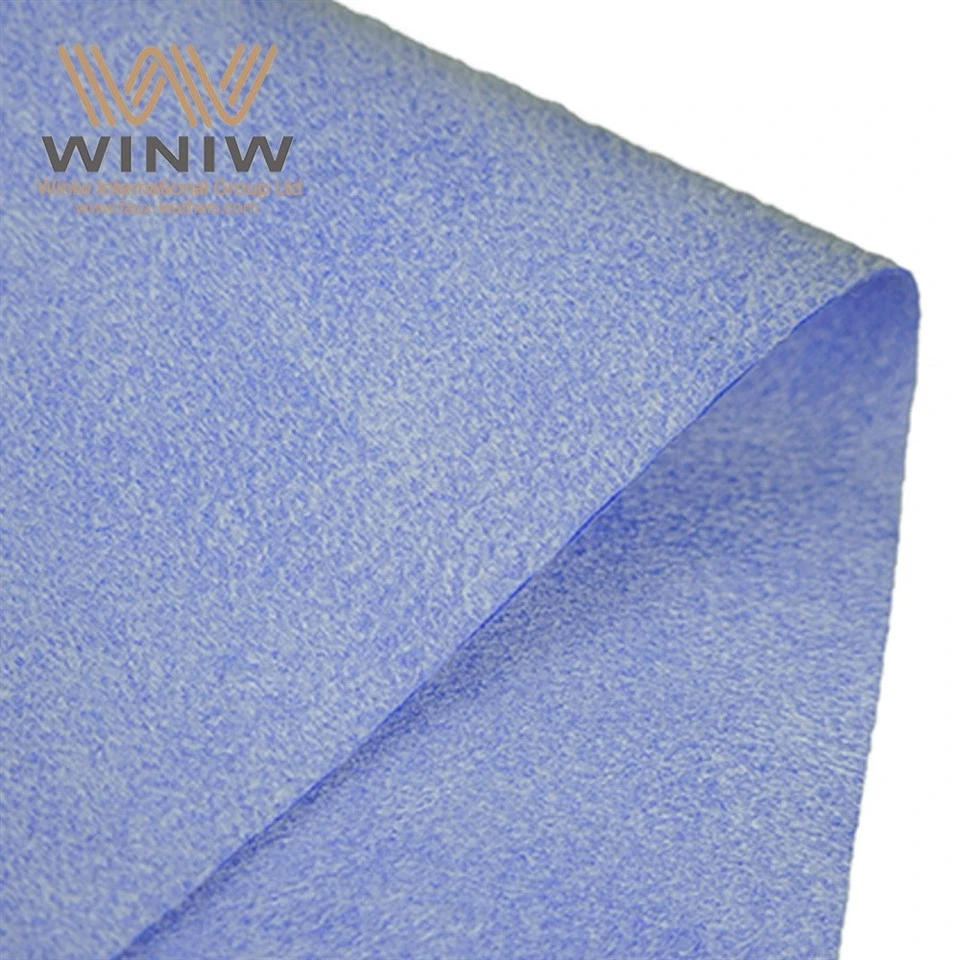
The pile face on the white cloth: dense, matte and slightly mottled, which is what a non-woven chamois looks like before printing or coating. A caliper reading is taken across this face; the cut edge at the fold is the easiest place to check it.
Two consequences matter at goods-in. Gauge is not absorbency: retention depends on how open the pile is and on the base, and we do not publish an absorbency percentage for this line, so a figure quoted without a method cannot be checked. Gauge is not weight either: grams per square metre is a separate reading we also do not publish for these gauges.
0.8, 1.0 and 1.2 mm: What Each Gauge Does
The three are not grades of one cloth but three behaviours cut from one construction.
0.8 mm: conformity first
This is the gauge that follows. It lays into a windscreen curve, sits flat under a door handle, and slips behind trim without bunching. The trade is water carried per pass: on a large wet panel it loads and needs wringing sooner. Use it where access is the constraint, not where volume is.
1.0 mm: the general gauge
If a programme has one gauge, this is the one to trial. It holds enough water for a full panel pass, still conforms at moderate curvature, and behaves predictably under hand pressure. Most first swatch requests land here and stay here.
1.2 mm: volume first
The heaviest carries the most water and covers more surface before a wring. On tight radii it is the least forgiving: it bridges instead of following, and the strip under the bridge is where streaks start. It suits open panels and stations that reload rarely.
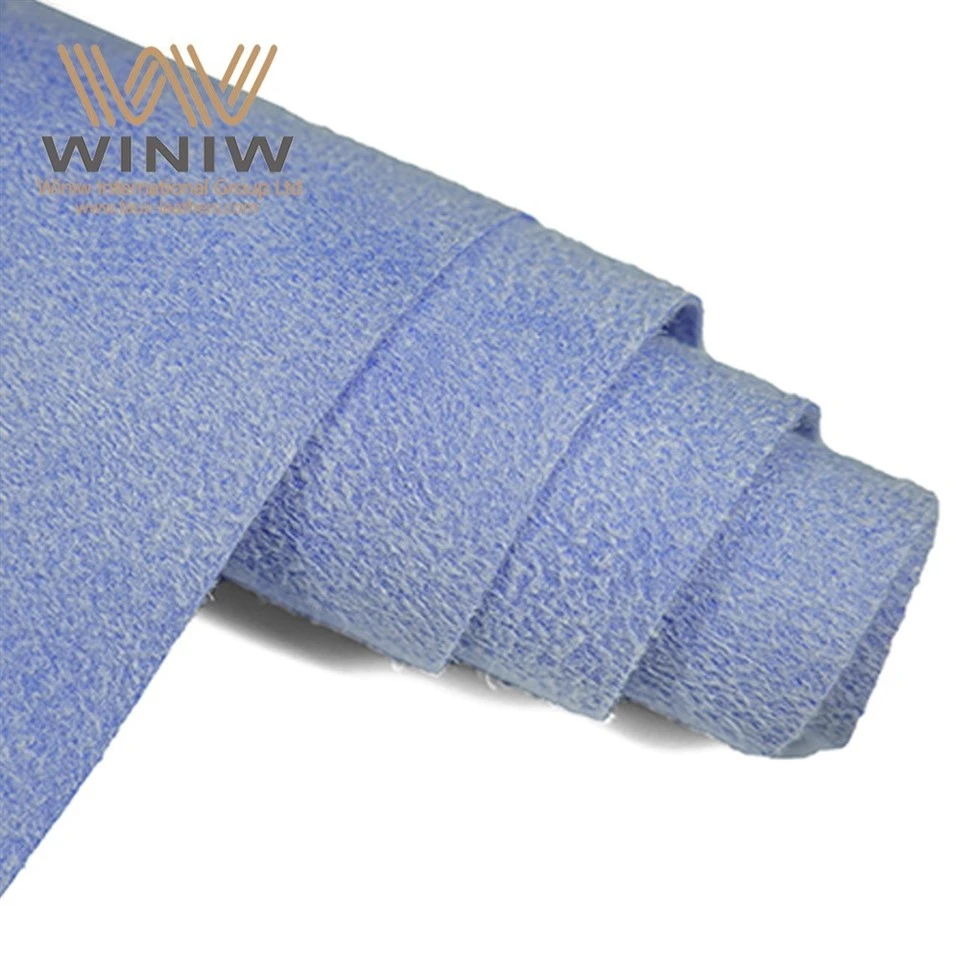
One note applies to all three: the cut edge is unsealed, and edge finish does not improve with gauge. Agree it, whether cut square or trimmed to the piece size, at the same time you agree the thickness.
Thickness at a Glance
The table compares chamois cloth thickness at the three gauges on the dimensions that change a buying decision. Entries marked qualitative are exactly that; none is a measured performance figure for this cloth.
| Parameter | 0.8 mm | 1.0 mm | 1.2 mm |
|---|---|---|---|
| Conformity to curvature | Highest | Moderate | Lowest |
| Water carried per pass | Lower | Moderate | Higher |
| Best suited to | Curved glass, narrow trim, tight gaps | General panel wipe-down, paint prep | Open panels, large flat areas, wet work |
| Less suited to | Dry, large-area passes | Very tight radii | Narrow gaps and sharp folds |
| Roll width | 150 cm | 150 cm | 150 cm |
| Cut edge | Unsealed | Unsealed | Unsealed |
| Colour | Black, white, red, blue, green, yellow, pink, beige, plus custom colours | ||
Procurement note: one trial order covering all three gauges costs one freight and one approval cycle, and settles an argument that would otherwise run a quarter.
Matching the Gauge to the Substrate and the Fluid
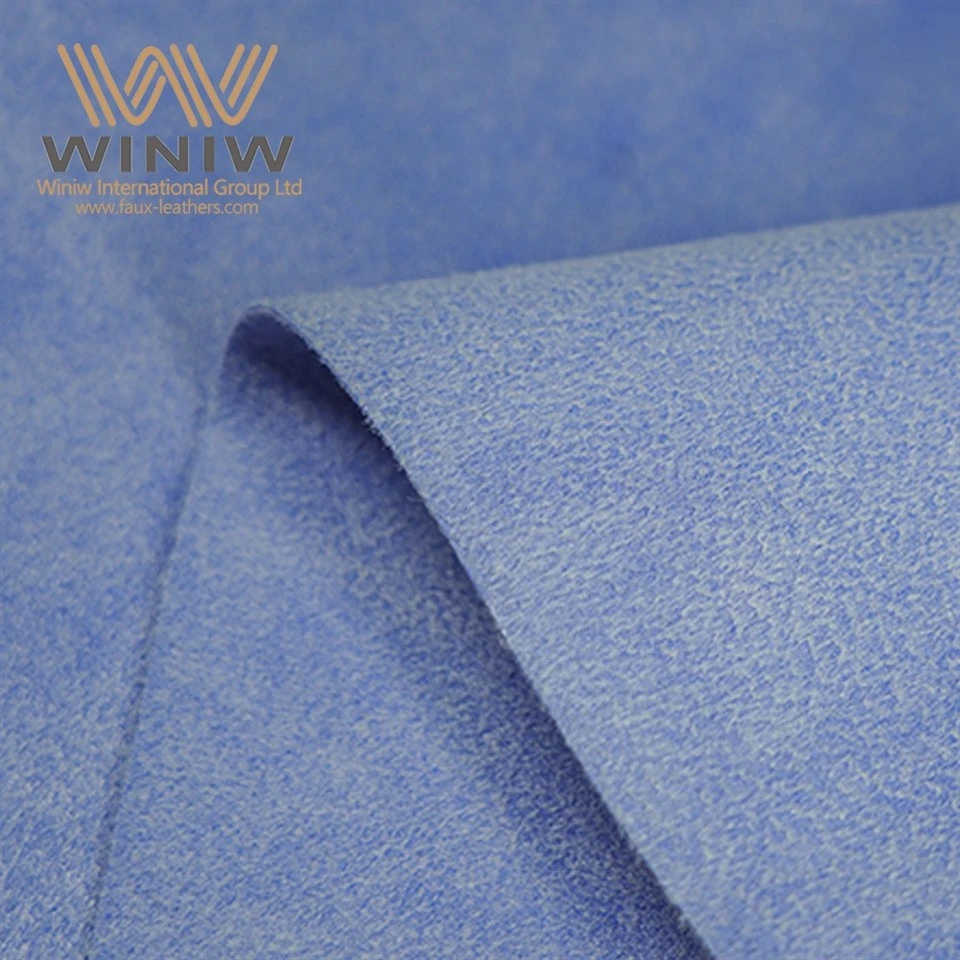
The same construction in blue, corner turned back. Colour carries the zone code on a shop floor; the pile face does the wiping.
- Gloss paint and coated panels. Use the thinnest gauge that still holds enough water for the pass, and keep a separate cloth for the final wipe. A cloth loaded with compound dust is not a finishing cloth at any gauge.
- Glass and mirrors. 0.8 mm reaches the edges where a heavier cloth bridges. The limit is pressure, not thickness: heavy hand pressure on glass does nothing a lighter pass will not do.
- Light interior trim. On light trim, a white ground shows soil before the cloth meets the next surface: a visibility decision, not a performance claim.
- Workshop fluids: coolant, way oil, IPA. We publish no compatibility table. Send the fluid data sheet with the swatch request and test on the fluid you actually use.
Where Thickness Decisions Go Wrong
Illustrative field condition, based on common buyer queries. It is not a named customer case and carries no measured result.
- The gauge is chosen by price. Two quotes are compared per piece, the cheaper one wins, and the piece turns out to be a lighter gauge. The comparison was never like for like.
- The tolerance is never written. "1.0 mm" without a tolerance is a range. Quotations in the trade commonly sit around ±0.05 to 0.1 mm, trade-typical rather than measured for this cloth, so ask for the number in writing before the order.
- One gauge runs the whole site. Every station gets the same cloth: curved-glass jobs fight a cloth that will not follow, open-panel jobs wring every few minutes. Two gauges usually cost less than the time lost.
How to Verify Thickness Before You Commit
Five checks, all doable with the swatch and the caliper you already use at goods-in.
- Get the gauge and the tolerance in writing, with the measuring method named. A number without a tolerance is a marketing figure.
- Measure at three points across the width. Cloth on gauge at the selvedge and under gauge in the middle passes a one-point check and fails in use.
- Fold and crease it at a tight radius, then look at the pile face. You are checking whether the face lifts or the fold stays closed.
- Run your own fluid or compound on it. A catalogue photo cannot tell you how the cloth behaves with your chemistry.
- Match the paperwork to the material level. Our REACH SVHC screening is material-level: Intertek report SZHH01505701, all screened substances below the 0.1% declaration threshold. That is not a finished-cloth certificate, and it belongs in your own incoming inspection rather than in place of it.
None of this needs a lab, only the gauge, tolerance and method written down before the order.
Who Makes This Cloth
The cloth runs on our own non-woven line in Jinjiang, Quanzhou, Fujian. Four stages sit under one roof: fibre spinning, 3D non-woven forming, impregnation and coating. Group output runs to roughly one million metres a month across product lines, which is why a 150 cm roll is a stock item rather than a special run.
Two things follow. The base is formed in-house rather than bought in, so chamois cloth thickness and pile height are set at the line. And the material-level file sits with the same entity that ships the roll, so the reference on the quote belongs to the material on the pallet.

Unwinding, coating and oven sections on the microfiber line. Pile height and gauge are set here, before the roll is slit.

Finished rolls held in the dispatch warehouse. Swatches are cut from the same stock position as production.
Why Trust This Guide?
We make this material, which is a reason to read our numbers carefully rather than skip them. Every figure here is limited to what we can support: three gauges, one roll width, one material-level report with a number you can ask to see.
Where we publish nothing, whether grams per square metre, absorbency percentage, a formal thickness tolerance or a fluid compatibility table, we say so instead of filling the gap with a trade average. Those are the questions to put to us at the sample stage.
For the two colours this stock is usually specified in, see the white chamois cloth for car detailing page and the blue chamois cloth for industrial wiping version: same three gauges, same construction.
Chamois Cloth Thickness: 5 Questions Buyers Ask
Is a thicker chamois cloth more absorbent?
Not by definition. Retention depends on how open the pile is and on the base, so a 1.2 mm cloth and a 1.0 mm cloth of different construction can reverse order. We do not publish an absorbency percentage for this line; test the swatch with the fluid you use.
Can one thickness cover both paint and glass?
1.0 mm covers both at a workable level and is the usual first trial. If the programme has a lot of curved glass or narrow trim, 0.8 mm earns its place as a second gauge. Keep the finishing wipe on its own cloth either way.
What tolerance should I put in the purchase spec?
Ask for a stated tolerance, in millimetres, with the measuring method named. Trade quotations commonly sit around ±0.05 to 0.1 mm, which is trade-typical rather than a measured value here. The number matters less than having it written before the order.
Does thickness change the cut edge?
No. Every gauge is supplied with an unsealed cut edge, so edge finish is a separate decision from thickness. Agree it at the sample stage: cut square, remade to a template, or trimmed to the piece size the station issues.
Do all three gauges come off the same roll width?
Yes. 0.8, 1.0 and 1.2 mm all run on the same 150 cm width, so a single trial order can cover the comparison without changing anything else in the specification. Colour and edge finish are chosen separately from the gauge.
Send the panel size and the fluid you wipe
Tell us the substrate, the fluid in use, and the piece size your station issues. We reply with the gauge that fits and A4 swatches, freight at cost on the first request.
Related Reading