

What comes back from a watch window is usually a short list of small failures. A corner has lifted off the plinth. A pink that looked warm in the showroom has gone dusty under the LED. The stand in front is a shade off the one behind it. None of that is a stand-building fault. It starts one layer down, at the surface.

The face, the plinth and the edge do different jobs
The face takes the light. Anything glossier than a fine pebble throws the spotlight back at whoever is looking, and that is why a matte sheet reads as expensive in a window while a shiny one reads as plastic - the same sheet, lit from two metres away.
The plinth takes the handling. It gets lifted, dusted and slid along a counter every day, often with a watch still on it.
The edge is where the two meet, and it fails first. Turn a sheet tighter than it wants to go and the coating stretches, the colour thins, and a pale line appears along the corner. You can hide it with a darker shade. You cannot un-see it once a buyer has spotted it.
Surface for each part
Most watch presentations are not one surface. They are two, sometimes three, and the split is worth settling before anyone orders swatches.
|
Part of the stand
|
Coated PU sheet
|
Soft pad
|
|
Face
|
Wipes down without going shiny; holds one shade for years
|
Collects dust it never gives back
|
|
Cushion under the case
|
Does the job, but a bracelet finds it hard
|
Correct here - pile or suede, soft against a clasp
|
|
Plinth and turned edge
|
Turns clean at the right radius; keeps the face colour round the corner
|
Frays where it is cut, unless every edge is bound
|
Four lines that settle an enquiry
Four lines settle most of it: the smallest radius the stand has to turn, the board you glue to, the shade you are building the window around, and whether the plinth is one piece or two. Send those and the answer is a grade per part instead of a guess.
|
Item
|
Value
|
On a watch stand
|
|
Thickness (mm)
|
0.4 / 0.5 / 0.6
|
0.4 for a tight turn, 0.5 for face and plinth, 0.6 for a wide span that must stay flat
|
|
Width
|
1370 mm (54 in)
|
two faces usually cut side by side, with an offcut for a pad
|
|
MOQ
|
300 m per colour
|
one shade, one run - a second shade starts its own
|
|
Backing
|
PU on microfibre or non-woven
|
takes water-based contact glue; tell us if you use spray
|
|
Report
|
REACH SVHC, Intertek SZHH01505701
|
issued to the sheet, not to a finished stand
|
Shade under a spotlight
Watch windows are lit harder than jewelry counters. A matte face is what keeps that light from flattening the product, and it is also what makes the shade question harder, because a matte surface changes colour as you walk past it.
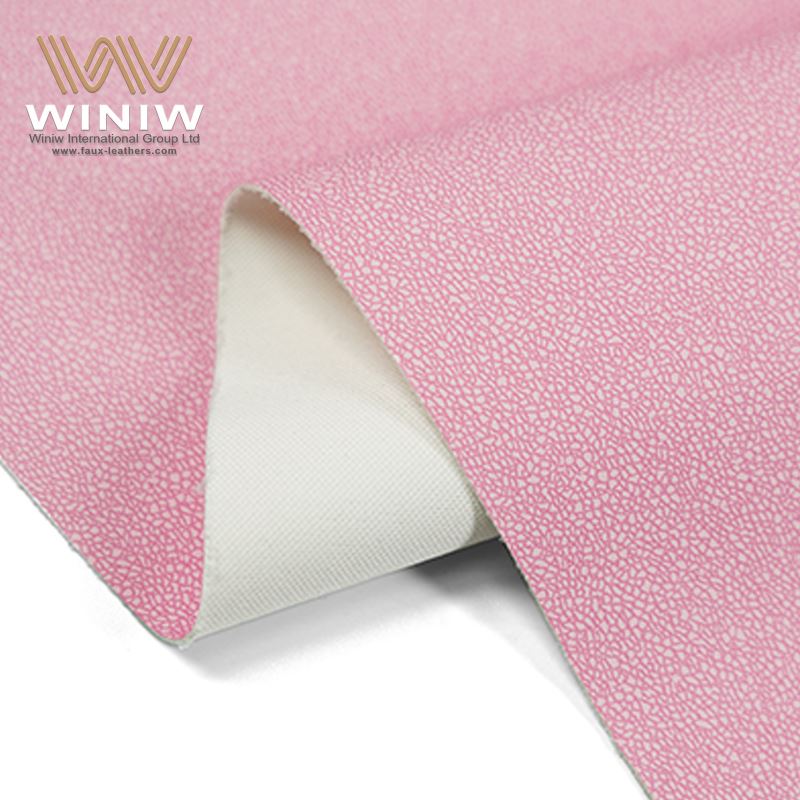
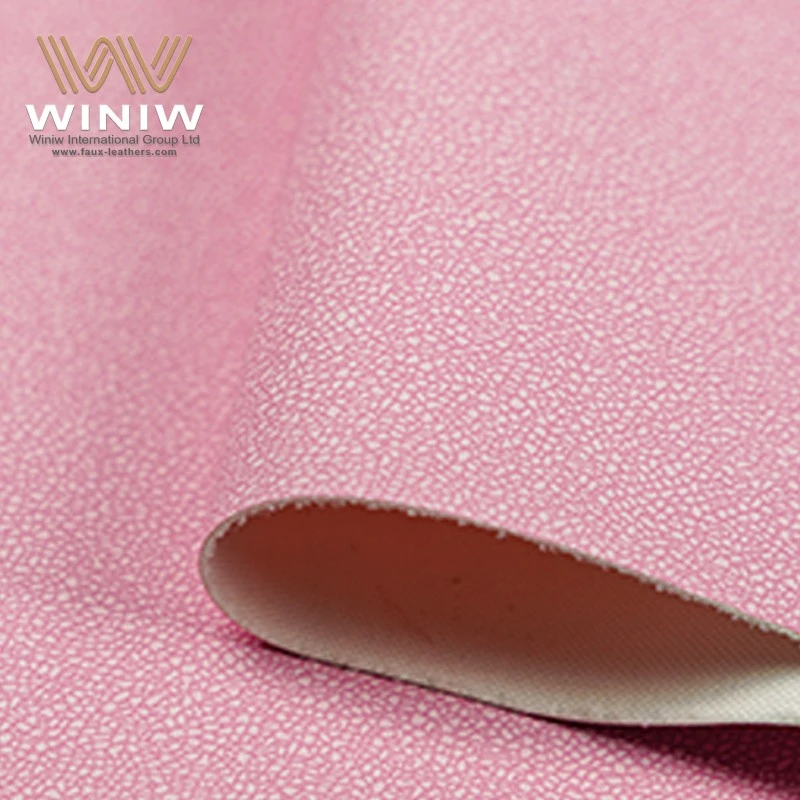
Deep tones - black, navy, espresso - carry steel and two-tone bracelets and forgive fingerprints. Pale tones carry rose gold and coloured dials, but they show a mark the same afternoon. Rose pink, the sheet in these photos, sits between the two: warm under a counter lamp, quiet next to a dial.
Approve it in the light the stand will live in. A pink that looks right on a bench turns dusty under a cool LED, and no swatch book can tell you which way your window leans.

Re-ordering a window without a visible seam in the range
A re-order rarely means one plinth. It means the window, a season later, standing next to pieces that have been in use since spring. Two habits stop that from looking like two suppliers: cut the window set from one run, and file the signed chip against the purchase order instead of pinning it to a cork board behind the desk.
It also helps that every shade here is pressed from the same plate onto the same backing. Moving a window from black to rose pink doesn't re-teach the bench - same handle, same pebble depth, same glue behaviour - so a fourth finish can be added without new tooling for the plinths.


Questions buyers actually ask
What can I use to display jewelry?
Board covered with a coated face, most of the time. It wipes clean, keeps its shape and holds a colour across a long run. For watches there is one extra condition: keep the face matte, or the spotlight comes back at the customer's eye and the whole window reads cheap.
What are the downsides of PU leather?
It won't age the way good genuine leather does, and it isn't an anti-tarnish material - if a clasp sits on it for months, expect the metal to react to its environment, not to the sheet. What you get instead is a shade and a grain that hold steady across a long run, a surface you can wipe, and a cost per metre that lets a retailer change a window twice a year.
How long will PU leather last?
Depends on the light, the cleaning and how many hands touch it, so we don't put a year on it. What we can hand over is the paper: material-level REACH SVHC screening, report number above. If your buyer needs a rub or a light test, name the method and it can be run against this sheet.
What material are jewelry boxes lined with?
A coated face or a textile over a board core, usually. Pile goes where the interior is the selling point; a coated face goes where the box is stacked, shipped and opened a hundred times a day. Watch presentation tends to use both - sheet on the stand, soft seat under the case.
Should a watch stand use a different sheet from a jewelry stand?
Same coated side, different gauge and shade, as a rule. A watch plinth is wider and flatter, so it wants more body; a small jewelry pad is fine thin. That is why we quote per part - one grade number for a whole window tends to be wrong somewhere.
Send the drawing, get a swatch back
A photo of the stand is enough to start. Add the radius, the board and the shade you're working to, and we'll come back with the grade for each part, the nesting across the roll and a piece you can hold under your own light.
Request a Window Sample
Hot Tags: watch display stands: which surface goes where, China watch display stands: which surface goes where manufacturers, suppliers, factory, Anti Mildew PU Vinyl Leather Fabric for Bag Making, Automotive PU Synthetic Leather Fabric Material Microfiber for Car Seats, Faux Leather Material Polyurethane Fabric Leather for Labels, Free Samples Custom Printed Faux PU Football Leather in Bulk High Quality Pu Leather, High End Comfortable Vegan Faux Leather PU Imitation Leather for Labels, Thickness 0 4mm PU Material Vinyl Leather Packing Material


