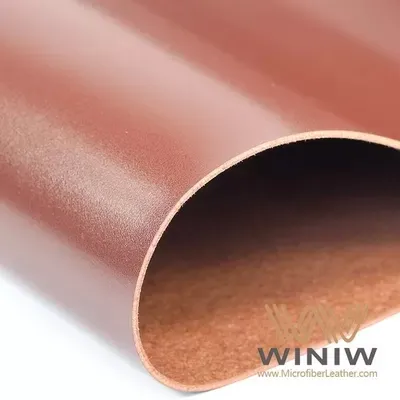
In recent years, the global conversation around environmental sustainability has reached a fever pitch. Consumers are becoming more conscious about the environmental impact of the products they purchase, and this shift in mindset has significant implications for the leather industry. Microfiber faux leather, a popular alternative to genuine leather, has emerged as a key player in this evolving market. As a microfiber faux leather supplier, I've witnessed firsthand the growing interest in this material, especially regarding its eco - friendliness. In this blog, I'll delve into the question: Is microfiber faux leather eco - friendly?
Understanding Microfiber Faux Leather
Microfiber faux leather is a synthetic material designed to mimic the look and feel of genuine leather. It is typically made from a combination of polyester microfibers and polyurethane (PU) resin. The microfibers are incredibly fine, often less than one denier, which gives the material its soft texture and durability. The PU resin is then applied to the microfiber base, providing a protective layer and enhancing the material's leather - like appearance.
One of the main advantages of microfiber faux leather is its versatility. It can be used in a wide range of applications, from fashion and upholstery to automotive interiors. For example, our Water Absorbent Synthetic Leather Fabric Material Breathable for Shoes Lining is specifically designed for shoe linings, offering excellent water absorption and breathability. Similarly, our UV Resistant Synthetic Leather Fabric Material for Ball is suitable for ball making, with enhanced UV resistance to ensure long - lasting performance.
Environmental Benefits of Microfiber Faux Leather
Reduced Animal Cruelty
One of the most significant environmental and ethical benefits of microfiber faux leather is that it eliminates the need for animal slaughter. The traditional leather industry relies on the raising and killing of animals, primarily cows, to obtain leather. This process is not only ethically controversial but also has a substantial environmental footprint. By choosing microfiber faux leather, consumers can support a more compassionate and sustainable alternative.
Lower Resource Consumption
Compared to genuine leather, microfiber faux leather generally requires fewer resources to produce. The production of genuine leather involves large amounts of water, energy, and chemicals. For instance, tanning, a crucial step in leather production, uses a significant amount of water and toxic chemicals such as chromium salts. In contrast, the production of microfiber faux leather is relatively more resource - efficient. The raw materials, polyester microfibers and PU resin, can be produced in a more controlled environment, with less water and energy consumption.
Longer Lifespan
Microfiber faux leather often has a longer lifespan than some types of genuine leather. It is more resistant to wear and tear, scratches, and stains. This means that products made from microfiber faux leather do not need to be replaced as frequently, reducing the overall demand for new materials and minimizing waste. Our Imitation Leather Vegan Microfiber Faux Leather for Ball Making is a prime example of a durable product. It can withstand the rigors of ball games, ensuring that it lasts for a long time.


Environmental Concerns Associated with Microfiber Faux Leather
Chemical Use
While microfiber faux leather production uses fewer chemicals than genuine leather production, it still involves the use of chemicals, particularly in the application of the PU resin. Some of these chemicals, such as solvents and isocyanates, can be harmful to human health and the environment if not properly managed. During the manufacturing process, these chemicals can be released into the air and water, posing risks to workers and local ecosystems.
Non - Biodegradability
Most microfiber faux leather is made from synthetic materials, which are non - biodegradable. When products made from microfiber faux leather reach the end of their life cycle, they often end up in landfills, where they can persist for hundreds of years. This contributes to the growing problem of plastic pollution, as the polyester microfibers and PU resin do not break down naturally.
Microplastic Pollution
Another concern is the potential for microplastic pollution. When microfiber faux leather products are washed or worn, tiny plastic fibers can be released into the environment. These microplastics can enter waterways and oceans, where they can be ingested by marine life, causing harm to ecosystems and potentially entering the human food chain.
Mitigating the Environmental Impact
As a microfiber faux leather supplier, we are committed to minimizing the environmental impact of our products. We are constantly researching and implementing new technologies to reduce chemical use in our production processes. For example, we are exploring the use of water - based PU resins, which are less toxic and have a lower environmental impact than traditional solvent - based resins.
In addition, we are working on developing more sustainable end - of - life solutions for our products. One approach is to promote recycling programs. By collecting and recycling used microfiber faux leather products, we can reduce the amount of waste sent to landfills and conserve resources. We are also researching ways to make our products more biodegradable, such as using biodegradable polymers in the production process.
Conclusion
The question of whether microfiber faux leather is eco - friendly is complex. On one hand, it offers several environmental benefits, such as reduced animal cruelty, lower resource consumption, and a longer lifespan. On the other hand, it also has some environmental drawbacks, including chemical use, non - biodegradability, and the potential for microplastic pollution.
However, with continuous innovation and a commitment to sustainability, the environmental impact of microfiber faux leather can be significantly reduced. As a supplier, we are dedicated to driving this change and providing our customers with high - quality, environmentally responsible products.
If you are interested in learning more about our microfiber faux leather products or have any questions regarding their environmental impact, please feel free to contact us for procurement and further discussions. We look forward to working with you to create a more sustainable future.
References
- "The Environmental Impact of Leather Production" - Journal of Environmental Science and Technology
- "Synthetic Leather: Production, Properties, and Applications" - Textile Research Journal
- "Microplastics in the Marine Environment: A Review of Sources, Fate, and Effects" - Environmental Science & Technology