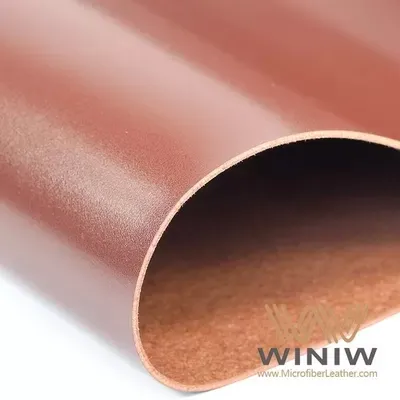
Hey there! As a microfiber faux leather supplier, I've dealt with this material day in and day out. It's super popular these days, used in so many things like furniture, fashion, and stationery. But here's the thing: lots of people struggle to tell if what they're looking at is actually microfiber faux leather. So, I thought I'd share some tips on how to tell if it's the real deal.
1. Look at the Surface Texture
One of the first things you can do is take a close look at the surface of the material. Microfiber faux leather usually has a very smooth and uniform texture. It doesn't have the natural grain patterns that real leather has. Real leather has unique, irregular grain patterns because it comes from animals. With microfiber faux leather, the surface is often more consistent, like it's been manufactured to look a certain way.
If you're looking at a piece of material for a notebook cover, for example, check out 0.5mm Does Not Crack Faux Leather Vinyl Sheets for Making Notebook Cover. The surface of this microfiber faux leather is smooth and even, perfect for a sleek notebook design. You won't see those random bumps and lines that you'd find on real leather.
2. Check the Thickness and Flexibility
Microfiber faux leather comes in different thicknesses, but it generally has a good balance of thickness and flexibility. It's not too thick and stiff like some low - quality imitation leathers, nor is it too thin and flimsy.
A thickness of around 0.5mm is quite common for many applications, like making stationery pouches. The 0.5mm Not Easy To Deform Mushroom Leather Stationery Pouch Material is a great example. It's thick enough to hold its shape well, so your pouch won't get all floppy, but it's also flexible enough to be easily folded and sewn. Try bending the material gently. If it bends smoothly without cracking or splitting, it's likely microfiber faux leather.
3. Look for Signs of Durability
Durability is a key factor when it comes to microfiber faux leather. This material is designed to be long - lasting and resistant to wear and tear. One way to test this is to rub the surface gently with a piece of cloth. If it starts to fade, peel, or show signs of damage easily, it might not be high - quality microfiber faux leather.
Another aspect of durability is its resistance to environmental factors. For instance, if you're using it for display stands, you'll want a material that can withstand light without fading. The Light Resistant Alcantara Suede Fabric Material for Display Stands is made to be light - resistant. It won't lose its color or texture quickly when exposed to sunlight, which is a big plus for long - term display use.
4. Smell the Material
This might sound a bit odd, but the smell can give you a clue. Real leather has a distinct, natural smell, often described as a rich, earthy odor. Microfiber faux leather, on the other hand, usually has a more synthetic smell. It might smell like plastic or chemicals, especially when it's brand new.
However, keep in mind that some manufacturers use special treatments to reduce or change this synthetic smell. So, while smell can be a factor, it's not always the most reliable way to tell.
5. Examine the Edges
The edges of microfiber faux leather can also tell you a lot. High - quality microfiber faux leather will have clean, well - finished edges. If you look closely at the edge of a cut piece, it should be smooth and not frayed or ragged.
When you're buying material for a project, make sure to ask the supplier about the edge quality. A good supplier will take care in cutting and finishing the edges of their microfiber faux leather products.
6. Consider the Price
Price can be a rough indicator. Microfiber faux leather is generally more affordable than real leather. If a product is being sold at a price that seems too good to be true for real leather, it might be microfiber faux leather.
But be careful! Just because something is expensive doesn't mean it's real leather, and just because it's cheap doesn't mean it's low - quality microfiber faux leather. There are high - end microfiber faux leathers that are priced higher because of their quality and features, like the light - resistant and durable ones I mentioned earlier.
7. Check the Label and Manufacturer Information
If you're buying from a store or a supplier, always check the label. It should clearly state if it's microfiber faux leather. Reputable manufacturers will be honest about what their products are made of.
You can also do some research on the manufacturer. Look for reviews and ratings online. A good manufacturer will have a track record of producing high - quality microfiber faux leather products.
Wrapping It Up
So, there you have it! These are some of the ways you can tell if it's microfiber faux leather. Whether you're looking for a material for a notebook cover, a stationery pouch, or a display stand, these tips can help you make an informed decision.


If you're interested in purchasing microfiber faux leather for your projects, don't hesitate to reach out. We have a wide range of products, from the notebook cover material to the light - resistant fabric. Just check out our product links above and see which one suits your needs best. Let's start a conversation about your requirements and find the perfect microfiber faux leather for you!
References
- General knowledge from years of experience as a microfiber faux leather supplier.
- Product knowledge of microfiber faux leather materials and their characteristics.